Constellation Columba
Star Constellations

Star Constellation Facts: Columba

Columba (the Dove) is situated in the southern part of the celestial hemisphere, and was created by Dutch astronomer Petrus Plancius in 1592, although a derivation of the constellation may have been known about for

Constellation Reticulum
Star Constellations

Star Constellation Facts: Reticulum

Reticulum is a dim southern sky constellation that was one of 14 introduced in the 18th century by French astronomer Abbé Nicolas Louis de Lacaille. It is named after a “reticle” or the sighting device

Coma Berenices
Star Constellations

Star Constellation Facts: Coma Berenices

Coma Berenices (“Berenice’s Hair”) is a very faint northern sky constellation that represents the hair of Berenice II of Egypt, the wife of King Ptolemy III who reigned from 246–222 BC. The constellation’s brightest star,

Delphinus
Star Constellations

Star Constellation Facts: Delphinus

Delphinus, meaning “the dolphin” in Latin, was one of the 48 constellations catalogued by the Greek astronomer Ptolemy in his 2nd century treatise called Almagest. Unlike many other constellations, Delphinus actually resembles the sea animal

Star Constellation Facts: Lupus
Star Constellations

Star Constellation Facts: Lupus

Lupus, meanings “the wolf” in Latin, is one of the original 48 constellations catalogued by the Greek astronomer Ptolemy of Alexandria around 150 AD. It is a southern hemisphere constellation found between Centaurus and Scorpius,

Constellation Octans
Star Constellations

Star Constellation Facts: Octans

Octans is the southernmost of all the 88 recognized constellations, and was named in the 18th century by the French astronomer Nicolas Louis de Lacaille after the now obsolete navigational instrument known as an octant.

Constellation Pictor
Star Constellations

Star Constellation Facts: Pictor

Pictor was named by French astronomer Abbé Nicolas-Louis de Lacaille after spending the period between 1750 and 1754 cataloguing stars of the southern celestial hemisphere while in South Africa. Originally called ‘Equuleus Pictorius’ or “the

Star Constellation Facts: Grus
Star Constellations

Star Constellation Facts: Grus

Grus is one of the twelve constellations that was created by Dutch astronomer Petrus Plancius in the late 16th Century, and subsequently incorporated by the German celestial cartographer Johann Bayer’s into his sky atlas called

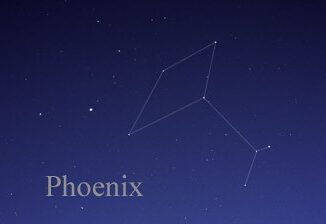
Constellation Phoenix
Star Constellations

Star Constellation Facts: Phoenix

The constellation Phoenix was created by Flemish astronomer Petrus Plancius in the 16th century, based upon the observations of Dutch explorers Pieter Dirkszoon Keyser and Frederick de Houtman who mapped the southern sky that century.

Sagitta
Star Constellations

Star Constellation Facts: Sagitta

Sagitta (“arrow”) is one of the original 48 constellations mentioned by Greek astronomer Ptolemy in his 2nd century treatise known as the Almagest. It is the night sky’s third smallest constellation, taking up an area